Algeria deploys troops to Niger for first time since 1973
Algiers broke its non-intervention policy to protect oil assets and the Trans-Saharan gas pipeline as regional rivals tighten their grip on the Sahel.
By Enzo Almasi ·
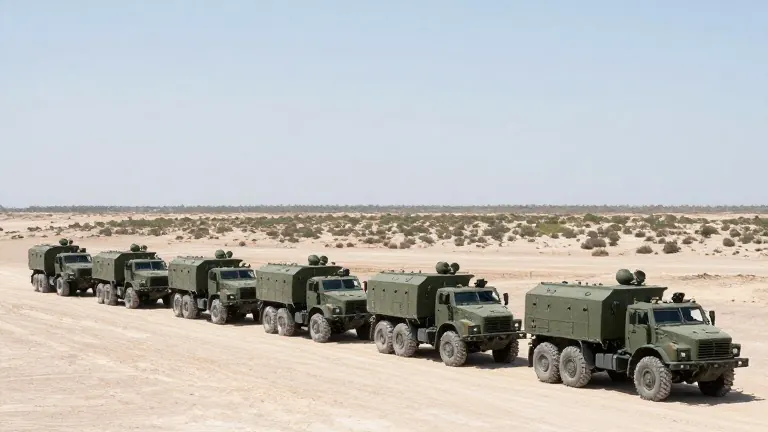
An Algerian military convoy entered Niger on Friday, ending a 53-year pause in the country's overseas deployments. The move marks a sharp break from a long-standing policy of non-intervention. The troops are stationed to guard economic infrastructure and oil facilities owned by Algerian companies.
This deployment follows an earlier air mission. On August 30, Algeria sent four fighter jets to help thwart a coup attempt against President Abdourahamane Tiani. Although Algiers opposed the 2023 coup that placed Tiani in power, President Abdelmadjid Tebboune now appears ready to support the leader. Senator Belkacem Boulghiti stated on Sunday that the ground forces are not there to wage war.
The decision stems from a perceived threat by a coalition of the United Arab Emirates, Morocco, and Israel. Retired diplomat Amar Belani described the instability in the Sahel as a destabilization strategy involving these states and French proxies. He warned that continued chaos would directly threaten Algerian interests and hinder the Nigeria-Niger-Algeria trans-Saharan gas pipeline project.
Algeria severed diplomatic ties with the UAE in September after warning Abu Dhabi of its hostile actions. The foreign ministry said the UAE persisted in behavior that was no longer tolerable. Zine Ghebouli, a visiting fellow at the European Council on Foreign Relations, noted that Algeria views the Emirati role as destructive. He added that Algiers opposed UAE lobbying to expand the Abraham Accords with Israel and Morocco.
Energy infrastructure is at the center of the dispute. Sonatrach, the Nigerien government, and the Nigerian National Petroleum Corporation are jointly developing a 4,000-kilometer pipeline to carry gas to Europe. Morocco is promoting a rival pipeline along an Atlantic route using the same gas reserves. The UAE has agreed to support the Nigeria-Morocco project financially and technically.
Dr. Fatiha Dazi-Heni, a senior political scientist at Irsem, explained that Niger is the only country the overland route cannot bypass. By securing Niger, Algeria is protecting its answer to the Morocco-UAE axis. Rabat and Abu Dhabi favor the Atlantic route, with Israel benefiting indirectly through its partnership with Morocco.
Regional military dynamics add to the complexity. Khalifa Haftar, the de facto ruler of eastern Libya and a UAE ally, has expanded his forces toward corridors connecting Libya and Niger. His son Saddam supports a Nigerien opponent of Tiani. Jalel Harchaoui, a Libya analyst at the Royal United Services Institute, said observers should not assume Algeria is intervening in Libya. He noted the mission relates to maintaining security on Nigerien soil.
Source: Middle East Eye