Israelis Cast Ballots as War Drags On and Polls Show No Clear Winner
Voters head to the polls for the Knesset with both major blocs projected to fall short of the 61 seats needed to form a government.
By Chiara Saeed ·
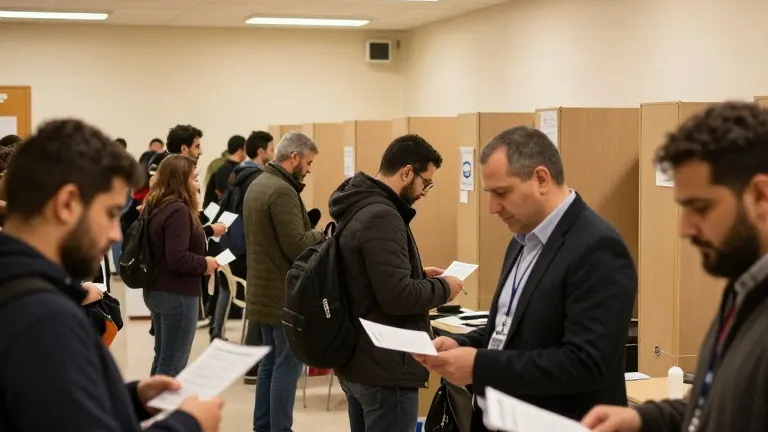
Israelis have lived through three years of multi-front conflict, and on Tuesday, they returned to the polls to choose a new government. The election is the first since the Oct. 7, 2023, Hamas attacks, a date authorities acknowledge as a defining moment in the country's history since 1948. As citizens voted, the nation continued its war in Gaza, Lebanon, and Syria, while Prime Minister Benjamin Netanyahu campaigned for a fourth term.
Polls indicate a tight race where neither the right-wing bloc led by Netanyahu nor the opposition change bloc is guaranteed a majority of the 120 Knesset seats. Right-leaning surveys favor Netanyahu's camp, while left-leaning polls show an advantage for the opposition. Most data suggests the margins will be too thin for a single side to govern alone, a scenario that could trigger weeks of negotiations or force a new vote.
Yohanan Plesner, president of the Israel Democracy Institute, told CBS News that an indecisive outcome is the most likely result. He noted that if politicians stick to their promises and refuse to switch sides during a stalemate, Israel will face another election. This echoes the period between 2019 and 2022, when the country held five elections due to similar deadlocks.
Netanyahu, the longest-serving prime minister in Israeli history, is running on the promise that only he can form a government without relying on Arab parties. His Likud party argues that its current coalition of ultranationalist and religious parties is best suited to finish the war in Iran and Gaza. President Donald Trump endorsed Netanyahu last week, warning that America would have to handle the Iran threat itself if Netanyahu lost power. Trump said, "If Israel has the wrong Leader, which would be anyone other than Bibi, America will have to do this work ourselves, and I am not inclined to do so."
Challenging the incumbent is Gadi Eisenkot, a former military chief and leader of the centrist Yashar party. Eisenkot lost his son and two nephews in the Gaza war and serves as the front-runner for the diverse change bloc, which includes Arab, left, and center parties. He criticized Netanyahu's reliance on fear-mongering regarding a nuclear threat, stating, "This time, it won't work for him." Eisenkot's platform includes launching a state inquiry into the security failures of Oct. 7, a move Netanyahu has previously blocked.
Voter turnout among Arab Israelis, who make up about 20% of the population, could tip the balance. Jehad Abomoch, a cafe owner in Baqa al Gharbiya, said many in his community are voting to prevent Netanyahu from forming another government with far-right allies. He described the last four years as a catastrophe, with many feeling they have "no hope, no future" under the current leadership. Higher Arab turnout could prevent Netanyahu from reaching the necessary majority.
Two new parties focused on ultra-Orthodox military service are also hovering near the threshold to enter the Knesset. Their performance could disrupt the traditional alliances that support Netanyahu. If neither bloc secures a majority, the change bloc might attempt to form a minority government with Arab party support. Alternatively, lawmakers may break promises and switch sides, a common practice in Israeli politics that often leads to protracted coalition talks.
The outcome of Tuesday's vote will determine whether Israel continues with its current government or enters a period of intense negotiation. With no clear winner projected, the next days and weeks will be critical in shaping the country's political direction.
Source: CBS News