Amazon Abandons Four Northern Virginia Data Centers Amid Local Opposition
The tech giant will convert a 122-acre Loudoun County property into homes and a community center after residents pushed back against the energy demands of AI infrastructure.
By Enzo Almasi ·
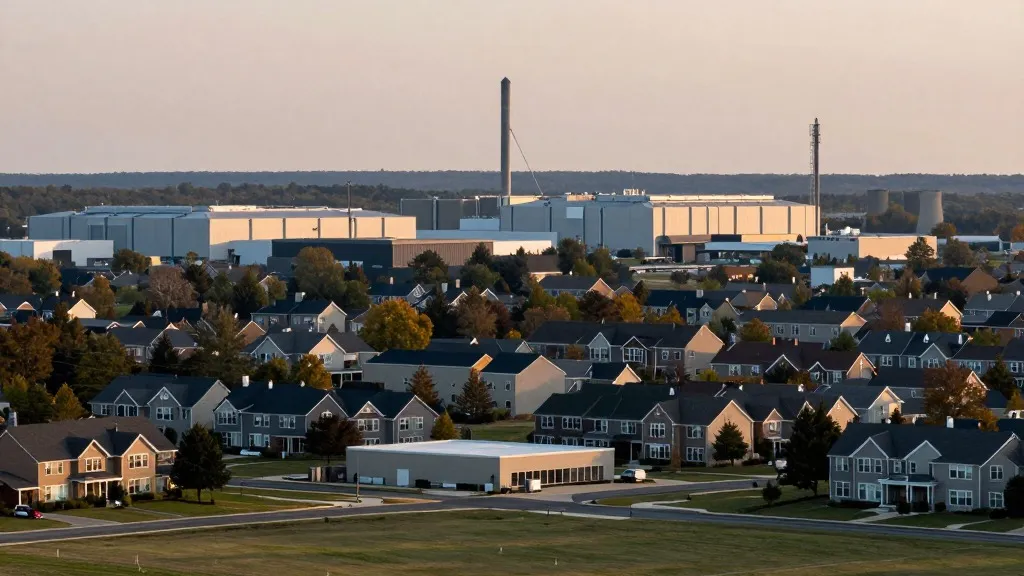
The tension between the insatiable appetite for artificial intelligence compute power and the local communities that host it reached a breaking point in Loudoun County. After months of friction, Amazon has officially scrapped its plans to construct four new data centers on a 122-acre parcel formerly used by George Washington University. In a significant shift from its initial strategy, the company will instead dedicate the majority of the land to mixed-use and residential development, effectively trading server racks for housing and public spaces.
The path to this decision was neither smooth nor immediate. Amazon first submitted its proposal for the new facilities in July, a move that quickly drew scrutiny from residents in a county already known as the global epicenter of data center construction. Concerns mounted regarding the noise generated by the equipment and the massive electrical loads required to sustain them. By September, the pressure became tangible when Phyllis J. Randall, the chair of the Loudoun County Board of Supervisors, met directly with Amazon representatives. During these discussions, county officials suggested that the company might be better served by finding an alternative use for the land rather than fighting for its original vision.
Amazon’s leadership acknowledged the weight of local sentiment. Josh Weissman, the company’s vice president for data center development, stated that while the firm initially viewed the property’s legal development potential differently than the county did, they recognized the "pointed concerns about data center development at this particular site." Rather than pursuing what he described as "costly litigation," the company opted for a shared vision. This compromise includes donating 25 acres of the property to the county for a community arts center and recreational facility, alongside a $5 million contribution to the local housing fund.
This retreat occurs against a backdrop of rising national debate over the environmental and economic footprint of AI infrastructure. As demand for cloud storage and processing power surges, local officials are increasingly wary of the strain these facilities place on electricity rates and water resources. Just days before the Amazon news broke, President Donald Trump called on data center builders to pay local communities a dividend to offset energy price increases. He further proposed that these facilities generate their own electricity and return excess power to the grid, a move aimed at mitigating the impact on local residents.
County officials are framing the outcome as a triumph of negotiation over confrontation. Randall emphasized that by choosing dialogue, the county secured new spaces for residents to gather and, crucially, more attainable homes for working families. For Amazon, the decision allows the company to maintain a footprint in the region without the immediate friction of a contested data center buildout.
Looking ahead, the 122-acre site will undergo a transformation that prioritizes residential needs over digital infrastructure. The donation of the arts center and the injection of capital into the housing fund signal a new model for land use in the area. While the broader push for AI capacity continues, this episode suggests that in high-density, high-visibility locations, the social license to operate may depend less on legal rights and more on community alignment.
The next phase involves the detailed planning and construction of the mixed-use development. Residents will soon see the site evolve from a potential tech hub into a neighborhood with new amenities. For Loudoun County, the agreement serves as a test case for balancing the region's status as a tech corridor with the quality of life its inhabitants expect.
Source: Tom's Hardware · original report published