61 Seats: The Number Israel Needs to Avoid Deadlock
Polls show a tight race between Netanyahu and Eisenkot, with neither side projected to command a governing majority.
By Enzo Almasi ·
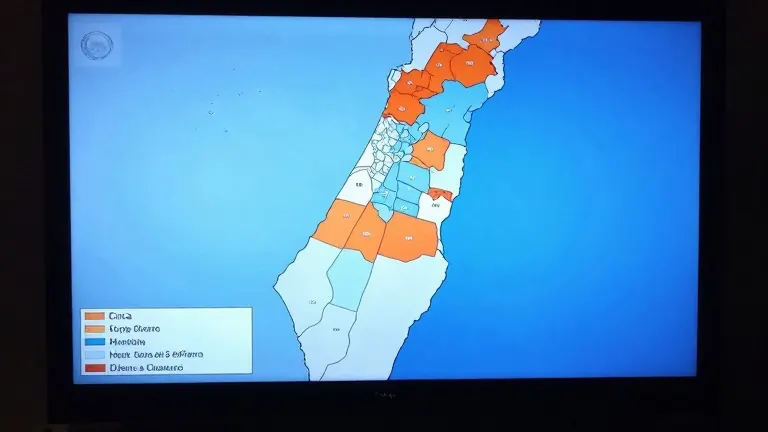
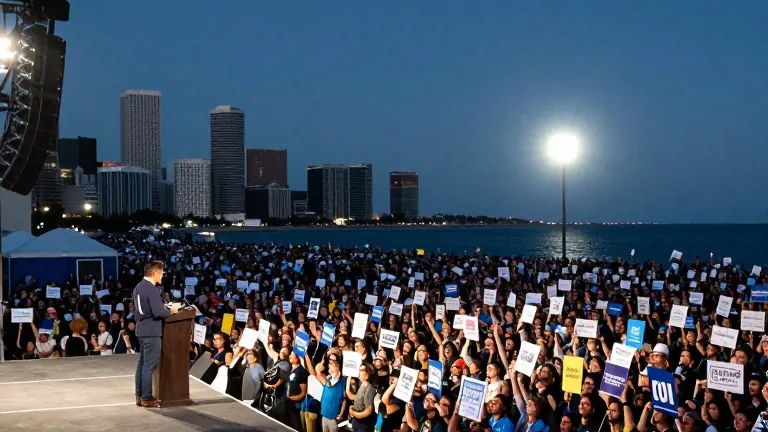
Israeli voters are casting ballots in an election where the primary contest is not just for leadership, but for the 61 seats required to form a government. Polling released on Friday indicates a near tie between Prime Minister Benjamin Netanyahu and former military chief Gadi Eisenkot.
Neither the current coalition nor the opposition bloc is projected to secure the necessary majority on its own. This leaves weeks or potentially months of coalition negotiations ahead, a process that has historically produced unpredictable alliances in Israel’s proportional representation system.
The campaign has centered on security, specifically the October 7, 2023, Hamas-led attacks that killed nearly 1,200 people and resulted in 251 hostages being taken to Gaza. The opposition, led by Eisenkot’s newly formed Yashar Party, has demanded an independent commission of inquiry into the security failure. Netanyahu has resisted this, arguing such a body would be biased against him, while positioning himself as the "Mr Security" figure who maintains a close relationship with US President Donald Trump.
The opposition, known as the "change bloc," includes a mix of right-wing and left-leaning figures. Former Prime Minister Naftali Bennett and Avigdor Lieberman, both right-wingers with hardline security views, sit alongside Yair Golan, a left-leaning former general. Netanyahu’s path to power depends on reuniting his current governing coalition with far-right and ultra-Orthodox parties, the most right-wing coalition in Israeli history.
Contested issues include the conscription of ultra-Orthodox men and the fate of the two-state solution. Eisenkot has pledged to end Hamas rule in Gaza within 18 months, a timeline that aligns closely with Netanyahu’s objectives. Both leaders largely support settlements in the occupied West Bank, though Eisenkot wants to curb extremist settler violence. The Arab party blocs, representing about one-fifth of the population, could theoretically act as kingmakers, though most leading Jewish parties have ruled out formal alliances with them.
In the final days of the campaign, Channel 12 reported that Netanyahu sought last-minute military action against Iran before the vote but was opposed by his military chief, Eyal Zamir. CNN subsequently reported that Netanyahu also tried to persuade President Trump to authorize new strikes, a request Trump declined. Netanyahu denied both reports. He also posted an AI-generated image of a nuclear bomb hitting Tel Aviv, a move Eisenkot called "hysterical."
Exit polls will be published at 22:00 local time on Tuesday. While these provide an early indication of results, they can vary. Many votes cast by soldiers and reservists will not be counted until Wednesday, a delay that may benefit right-wing parties with strong military support. If no bloc reaches a majority, Israel risks another deadlock, a scenario that led to five elections between 2019 and 2022.
Source: BBC News