Musicians reject AI and studio tricks to reclaim raw sound
Artists like Twisted Teens cite a flood of fakes and synthetic media as the reason for a shift toward gritty, low-tech production.
By Enzo Almasi ·
The music industry is grappling with a crisis of trust as audiences struggle to distinguish genuine human performance from artificial fabrication.
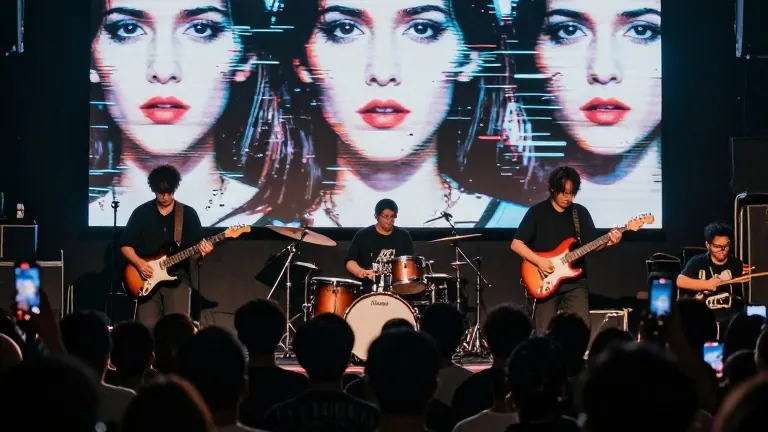
A growing cohort of artists is responding by abandoning polished studio techniques in favor of raw, confrontational sounds and do-it-yourself methodologies. This shift includes the punky retro garage style of New Orleans band Twisted Teens, the noise rock of Mandy, Indiana, and the self-dismantling hyperpop of underscores. These groups are gaining acclaim partly because they are perceived to be fighting a battle for the soul of music as it drifts toward what critics call AI slop. Caspian Hollywell, frontman of Twisted Teens, asserts that while listeners may hate the band, they cannot say it is not real. This claim rests on a lineage of authenticity debates that stretches back to the early 20th century.
The current wave of skepticism is fueled by a steady stream of scams and artificial enhancements that have eroded fan confidence. Stories of plagiarism, nepotism, and rigged viral successes appear frequently in mainstream pop. The Rolling Stones de-aging themselves in a video and the emergence of AI-generated artists have added to the sense of chaos. The result is an environment where fans feel they cannot trust what they hear, see, or buy. This atmosphere has prompted a move away from the sleek construction of palatable sounds using synthesizers and other studio tools toward more organic, immediate recordings.
Historical precedents show that new technology has always triggered disputes over what constitutes real music. In 1979, guitarist Ry Cooder became the first major label artist to record an album digitally, a move that surprised many in the roots music community. While Cooder initially appreciated the clarity, he later admitted the product sounded thin and cold when transferred to disc. A similar controversy erupted in the early 1990s when session singer Yvette Marine accused Paula Abdul of using computers to create a composite voice on her hit Opposites Attract. Marine sued but lost her case, and critic Simon Reynolds defended Abdul as a star devoted to showbiz, even if her music lacked resonance.
The authenticity debate also intersects with identity and cultural positioning. Cooder, a white artist, was largely accorded the right to roam in Black and brown musical communities due to his reputation as a session musician. Abdul, a Jewish woman with Middle Eastern roots who began her career as a Los Angeles Lakers cheerleader, faced more scrutiny as an interloper in Black-dominated R&B. Her commercial success in the early 1990s was met with scorn from critics who viewed her as a Madonna imitator. These social factors influence whether an artist can claim authenticity, often more so than the technology they use.
Scholars have identified three types of authenticity tests that artists face: representational, cultural, and personal. Representational authenticity asks if an artist actually performed the work, a question highlighted by the Milli Vanilli scandal. Cultural authenticity requires verifiable ties to specific communities or legacies. Personal authenticity raises intimate questions about whether a confessional song is based on the artist's actual experience. These distinctions establish the rules for the authenticity tests that every artist faces as their career progresses.
The average listener's ears tend to adjust to innovation over time, finding pleasure in the immediacy of the product. Few people question the verity of Donna Summer's performance in Love To Love You Baby or care that The Monkees did not always play their instruments in the studio. The public's idea of authenticity has previously credited TV bands for their charisma and acknowledged the artistry of producers like Giorgio Moroder in melding human emotions with synthetic grooves. Technology's seductions remain difficult to resist because new tools serve both pop's profits and pleasures, a dynamic visible in the holograms of ABBA Voyage and Bing Crosby's radio broadcasts in 1947.
Source: KPBS
More Business · Watch Your Wallet · Report a business · Got a Story?