NHTSA proposes national cyan light standard for driverless vehicles
Federal regulators are suggesting a uniform blue-green signal to help drivers and police identify when an automated system is in control of a car.
By Enzo Almasi ·
For people who share roads with autonomous vehicles, the way these cars communicate their status could soon become much clearer. Federal regulators have moved to standardize how driverless cars signal to the world that no human is behind the wheel. This change aims to end a period of confusion where different manufacturers used various methods to indicate automated operation. The proposal specifically focuses on adding a distinct visual cue that is easy for other road users to recognize and interpret.
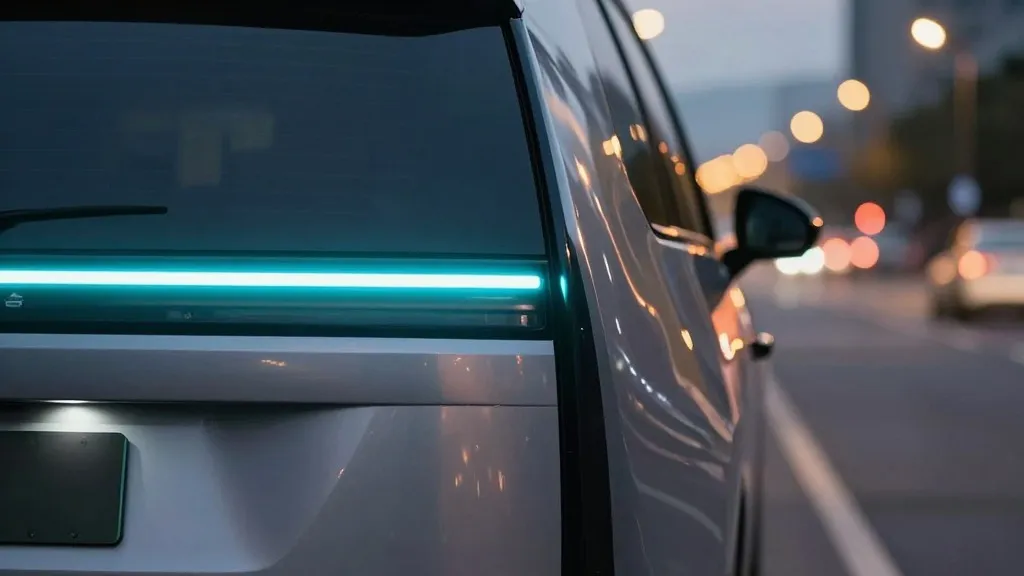
The National Highway Traffic Safety Administration released proposed changes to Federal Motor Vehicle Safety Standard No. 108. This update rewrites existing rules to better accommodate autonomous vehicles. A key part of the proposal involves the use of cyan colored marker lamps. These lights would serve as a consistent signal to law enforcement and other drivers whenever an automated driving system is controlling the vehicle. The agency chose this specific blue-green color because the auto industry already uses red, amber, white, and flashing blue or red lights for brakes, turn signals, and emergency vehicles. Cyan fills a visual gap without creating confusion.
There is some industry history supporting this approach. Mercedes-Benz received state-level approval for turquoise lights on its Level 3 Drive Pilot cars, although the company later shifted its focus to a Level 2++ system. The NHTSA aims to establish a national standard that operators like Waymo, Nuro, and Zoox, as well as automakers such as GM and Mercedes, can adopt uniformly. Under the proposed rule, these cyan lights would remain optional for manufacturers. However, by defining the color, brightness, and placement, the agency ensures that any company choosing to include them uses a consistent and legal setup rather than a variety of different signals.
The proposal also simplifies existing lighting requirements that are less relevant for vehicles without human drivers. Current rules require physical hazard switches, manual beam shifters, and turn levers inside the cabin. The agency proposes removing these mandates to reduce unnecessary complexity. Additionally, NHTSA is updating the 12.8-volt testing standard to align with modern LED architectures. The agency is also considering eliminating requirements that dictate the vertical positioning of high-beam lights relative to low-beam lights.
This regulatory update is part of a broader effort by the Department of Transportation to streamline the deployment of autonomous vehicles. The government is working to make it easier for automakers to build cars that lack traditional controls like steering wheels and pedals. However, regulators are still enforcing current rules strictly. Last month, NHTSA opened an audit query regarding the Tesla Cybercab. The inquiry examines the technical data Tesla used to certify the vehicle, specifically addressing the absence of design features such as sideview mirrors, pedals, and a steering wheel that are required under current federal safety standards.
The stakes for the industry are high as these rules evolve. A standardized signal helps ensure that public confidence in autonomous technology grows steadily. By providing a clear visual language, the NHTSA hopes to facilitate safer integration of driverless cars into everyday traffic. This move balances the need for innovation with the requirement for clear communication on the road.
Source: The Verge · original report published