Right-Hand Drive Void: Tesla Abandons Cybertruck in Australia
Seven years after taking deposits, Tesla has cancelled all Cybertruck reservations for Australia and New Zealand due to the high cost of right-hand-drive certification.
By Kwame Barrett ·
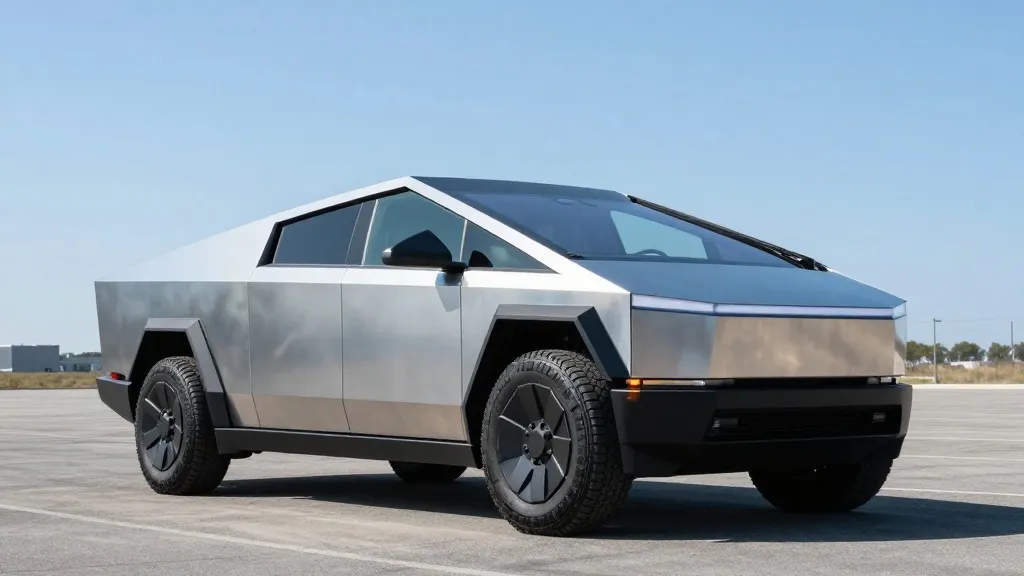
Tesla has formally terminated its plans to sell the Cybertruck in Australia and New Zealand, ending a seven-year wait for thousands of reservation holders who are now receiving notification of their refunds.
The cancellation notice, sent via email today, states that after careful consideration, production of the electric pickup for these two markets has been discontinued. Consequently, all outstanding reservations are void, and Tesla will process full refunds for any payments made within the next 30 days. To incentivize a switch to existing inventory, the company is offering a complimentary one-year subscription to its Full Self-Driving (Supervised) software for customers who purchase a Model 3 or Model Y instead.
This decision follows a long period of uncertainty. Australian consumers began reserving the truck in November 2019 with a deposit of A$150. For several years, Tesla maintained the option to order, but in May 2022, the company quietly removed the reservation page from its Australian website, replacing it with a simple 'Get updates' prompt. At that time, no refunds were issued, leaving customers in a state of limbo. Although a display tour of the vehicle took place in 2024, and CEO Elon Musk suggested to shareholders that certification for other markets might occur 'next year,' the right-hand-drive version never materialized.
The core obstacle is mechanical: the Cybertruck is manufactured exclusively in left-hand drive. Both Australia and New Zealand require right-hand-drive vehicles, and Australia additionally mandates specific certification under its own design rules. Re-engineering the truck to meet these standards represents a significant financial outlay, particularly given the vehicle’s current demand trajectory.
Financial data from Tesla’s third-quarter 2026 earnings report, released just one day before these emails went out, highlights the volume challenge. The company delivered only 8,295 units in the 'Other Models' category, a segment that now consists almost entirely of Cybertrucks since the end of Model S and Model X production. Estimates place Cybertruck sales at between 7,000 and 8,000 units in that quarter, suggesting an annual production pace of roughly 30,000 units. This is a fraction of the 250,000-unit annual capacity for which the production line was designed.
At this reduced scale, the investment required to re-engineer the truck for two markets with a combined population of approximately 33 million people is difficult to justify. Tesla’s recent international launches have focused strictly on left-hand-drive regions, including South Korea, the UAE, Saudi Arabia, Qatar, Jordan, and Israel. The truck remains blocked from entering the European Union, primarily due to pedestrian safety regulations.
Market data from 2020 suggested Australia was a significant target, with crowdsourced surveys indicating it held about 3% of all global Cybertruck reservations, ranking third behind the US and Canada. By 2023, total reservations worldwide had reached approximately 2 million, though Tesla never officially confirmed these regional figures.
The timing of the cancellation raises questions about the vehicle's future in international markets. With US sales having dropped from around 39,000 units in 2024 to a much lower figure today, the Cybertruck is increasingly viewed as a niche, domestic product. The current international strategy appears focused on finding buyers for existing left-hand-drive inventory rather than investing in new variants.
For those who reserved the vehicle in 2019, the truck they are being refunded for is no longer the same as the one available in the US. The current model is more expensive and offers less range than originally promised. Many reservation holders had likely already canceled their orders, making the formal end of the program a confirmation of a trend rather than a sudden shock.
The refund process begins immediately, with Tesla promising to process all payments within one month. While the move clears up the long-standing ambiguity for Australian and New Zealand consumers, it cements the Cybertruck’s status as a vehicle primarily built for the North American market.
Source: Electrek · original report published
More Business · Watch Your Wallet · Report a business · Got a Story?