Eight in 10 Cite Hardship as Democrats Take Senate
Midterm results show a surge in Democratic control of the upper chamber, driven by voter anger over inflation and government performance.
By Chiara Saeed ·
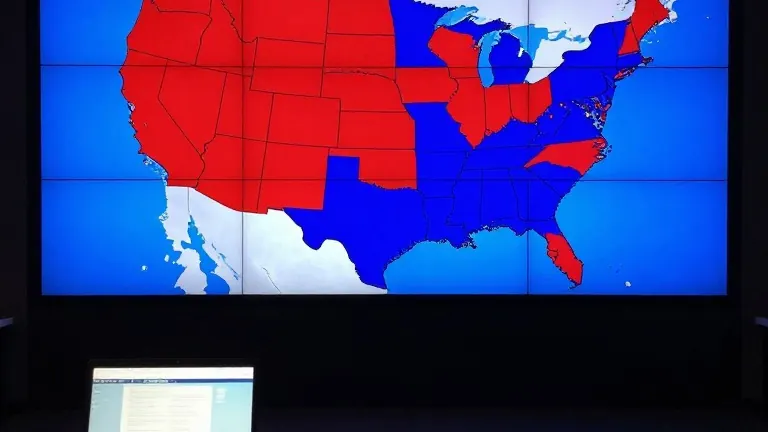
Democrats secured a majority in the U.S. Senate in the Tuesday elections, a result that shifts legislative power ahead of the end of President Donald Trump's second term. The party's victory was fueled by widespread dissatisfaction with economic conditions and the administration's handling of the war in Iran. While control of the House remains unresolved, Democrats gained enough ground to challenge the president's agenda in the Senate.
The party flipped several seats in states that historically vote Republican. Josh Turek won in Iowa, defeating Representative Ashley Hinson. In Kansas, Adam Hamilton unseated Senator Roger Marshall. James Talarico defeated Ken Paxton in Texas, while Sherrod Brown ousted Senator Jon Husted in Ohio. Annie Andrews won in South Carolina, and Roy Cooper took an open seat in North Carolina. These wins gave Democrats a platform to obstruct the president's plans for a further conservative shift on the Supreme Court.
Democrats also held key positions in the South. Senator Jon Ossoff defeated Representative Mike Collins in Georgia, preventing a Republican pickup. In New Hampshire, Representative Chris Pappas defeated former Senator John Sununu to succeed Jeanne Shaheen. Republicans managed wins in Florida and Wyoming, where Senator Ashley Moody won a special election and Representative Harriet Hageman secured her seat, respectively.
Economic anxiety drove voter turnout and opinion polls. The Associated Press Voter Poll indicated that roughly 75% of voters felt angry or dissatisfied with the country's direction. About eight in ten respondents said inflation caused moderate or severe financial hardship for their households. Half of voters cited government corruption and living costs as primary factors in their choice for Congress.
The Republican Party faced a late spending push into districts President Trump carried in the 2024 cycle. Despite this financial advantage, the party struggled to protect its Senate map. Trump attempted to distance himself from the losses on social media, writing that he was not on the ballot and that the party would have won in a landslide if he had been included.
Governor races also saw major shifts in party control. Gina Hinojosa defeated Texas Governor Greg Abbott, and Amy Acton beat Vivek Ramaswamy in Ohio. Keisha Lance Bottoms will become the first Black woman to serve as a state governor, while Byron Donalds became the first Black Republican elected to the office in Florida.
House Democrats needed a net gain of three seats to take control. They defeated incumbents in New Jersey, Pennsylvania, and North Carolina. A Democratic candidate also captured an open seat in Kentucky. Democratic House Leader Hakeem Jeffries proposed a 100-day program focused on reducing living costs and scrutinizing the administration if his party secures the lower chamber.
Source: WSVN 7News
More Politics · Fort Lauderdale news · Report a business · Got a Story?