California voters reject wealth tax as Democrats flip key House districts
Statewide ballot measure on a progressive tax fails while Democrats gain ground in congressional races.
By Kwame Barrett ·

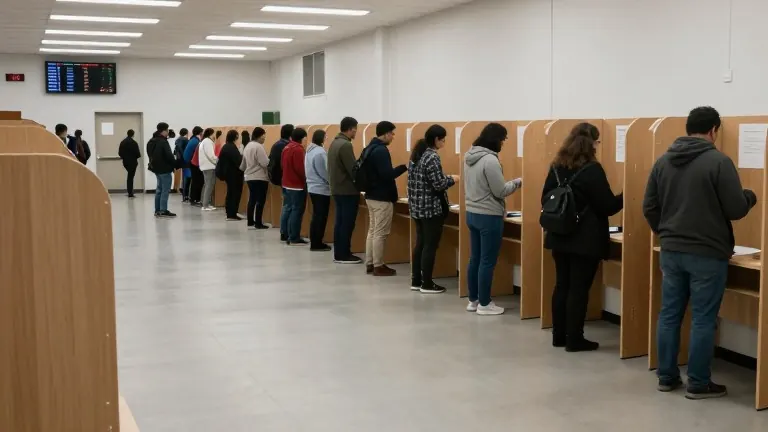
Voters in California rejected a wealth tax proposal on Tuesday, a result that signals a cautious approach to new revenue measures even as the state's congressional delegation shifts further toward the Democratic Party. According to Reuters, the tax championed by progressives including Senator Bernie Sanders looked headed to defeat, though officials were still counting votes and no major outlet had yet called the final outcome at the time of reporting. The measure would have imposed a one percent tax on the net worth of individuals with assets exceeding a high threshold, a policy that divided the state's political landscape.
The failure of the wealth tax comes against a backdrop of significant changes in the state's U.S. House representation. Ballotpedia data indicates that Democrats gained control of two previously Republican-held districts in California due to a retaliatory redistricting effort. In the 22nd District, Randy Villegas defeated incumbent David G. Valadao, flipping the seat to the Democratic Party. This race was identified as a battleground and marked a clear shift in the political map of the region.
In the 34th District, Angela Gonzales-Torres won the election, allowing Democrats to hold onto the seat. Ballotpedia noted that this district was also a battleground. The retention of this seat, combined with the gain in the 22nd, illustrates the impact of the new district lines drawn by state legislators in response to redistricting battles in other states. These changes were part of a broader national trend where Democrats targeted Republican-held seats through map adjustments.
California did not have a U.S. Senate race on the ballot this cycle, meaning the state's influence in the upper chamber remains unchanged for the next six years. However, the state's governor's office was not up for election in 2026, as the last gubernatorial race took place in a different cycle. This leaves the current executive leadership in place while the legislative and congressional dynamics in the state shift. The absence of a Senate race means California's two senators will continue to serve their terms without interruption from this election.
The results in California reflect the national Democratic wave that saw the party take control of both chambers of Congress. According to the Associated Press, Democrats won 233 seats in the House and 20 seats in the Senate, marking a decisive victory over the Republican Party. For California, this means an increased Democratic presence in Washington, which could influence federal policies affecting the state, including those related to housing, energy, and infrastructure. The state's large delegation will likely play a pivotal role in the new Congress.
The rejection of the wealth tax suggests that California voters, while supportive of Democratic candidates, may be hesitant to approve new taxes during a period of high cost of living. The Associated Press noted that voters nationwide were angry over rising prices, inflation, and the war in Iran. In California, dissatisfaction was particularly high, with the AP Voter Poll indicating that most voters felt frustrated with the country's direction. This economic anxiety likely influenced the decision to reject the new tax measure.
The redistricting that led to the Democratic gains in the 22nd and 34th districts was part of a broader strategy to counter Republican map changes in other states. The Associated Press reported that California's retaliatory redistricting offset the effects of Republican maps in places like Texas and Florida. This strategic move helped Democrats secure a net gain of 30 seats in the House nationwide. In California, the new maps proved effective in flipping competitive seats and solidifying Democratic control in key areas of the state.
As the new Congress prepares to convene on January 3, 2027, California's representatives will join a majority that has promised a 100-day agenda focused on lowering the cost of gas, groceries, and other goods. House Democratic Leader Hakeem Jeffries, who is expected to become the first Black speaker of the House, emphasized the need to deliver on the dramatic change voters demanded. For Californians, this means that the state's growing Democratic bloc will have significant leverage in shaping the national legislative agenda.
The outcome of the wealth tax vote will be finalized as officials complete the count, but the early results suggest a clear preference for maintaining the current tax structure. This result may have implications for future state budget proposals and could influence how state leaders approach fiscal policy in the coming years. The Associated Press noted that state governments are under pressure to address issues such as affordable housing and education funding, areas where California has been a leader in policy innovation.
With the election results in, California's political landscape is set to change in meaningful ways. The gain of the 22nd District and the retention of the 34th District strengthen the Democratic Party's position in the state's congressional delegation. The rejection of the wealth tax, meanwhile, provides a clear signal to state policymakers about the limits of voter support for new revenue measures. These results will shape the state's role in the new divided government and its ability to influence national policy.
The Associated Press reported that the biggest single-election change in partisan power in state governments since 2010 is now a reality, with Democrats holding full control in several states. While California did not see a change in its governor or senators, the shift in its House delegation aligns with this broader trend. The state's voters have spoken clearly on both the national and local fronts, prioritizing economic stability and strategic political gains in Washington.