Native Representation: Haaland and Flanagan Win Historic Midterm Races
Deb Haaland becomes the first Native American woman governor, while Tiffany Flanagan becomes the first Native American woman senator.
By Enzo Almasi ·
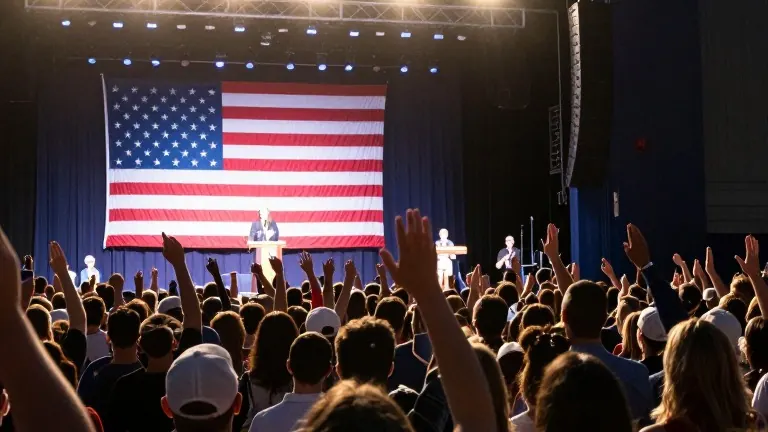
Two Native American women secured historic victories on Tuesday night, claiming a state governorship and a U.S. Senate seat for the first time in American political history. Deb Haaland won the governor's race in New Mexico, and Tiffany Flanagan won the Senate race in Minnesota.
Haaland, a citizen of Laguna Pueblo, defeated Republican challenger Gregg Hull, the former mayor of Rio Rancho. Her victory marks her return to the highest executive office in the state after serving as President Joe Biden's Interior secretary from 2021 until January 2025. She had previously made history in 2015 as the first Native American woman to chair a state political party and in 2018 as one of the first two Native American women elected to Congress.
In Minnesota, Lt. Gov. Tiffany Flanagan defeated Republican Michele Tafoya, a former sports broadcaster and conservative commentator. Flanagan is an enrolled member of the White Earth Nation and has served in the state Senate since 2019. Before that, she represented the state in the House of Representatives from 2015. Her campaign emphasized her background as a single mother in Section 8 housing and her reliance on Medicaid for childhood asthma.
During the campaign, Haaland focused on the cost of living, the protection of New Mexico's Universal Child Care program, and reforms to the child welfare system. She also pledged to pause the construction of new large-scale data centers via executive order on her first day in office, pending legislative guardrails. Flanagan ran as a progressive, supporting Medicare for All and national paid family and medical leave.
"My story is a lot like many New Mexicans, humble beginnings," Haaland told a congregation in Rio Rancho in October. She cited her experience raising a daughter alone, selling homemade salsa, and using food stamps as part of her message to voters.
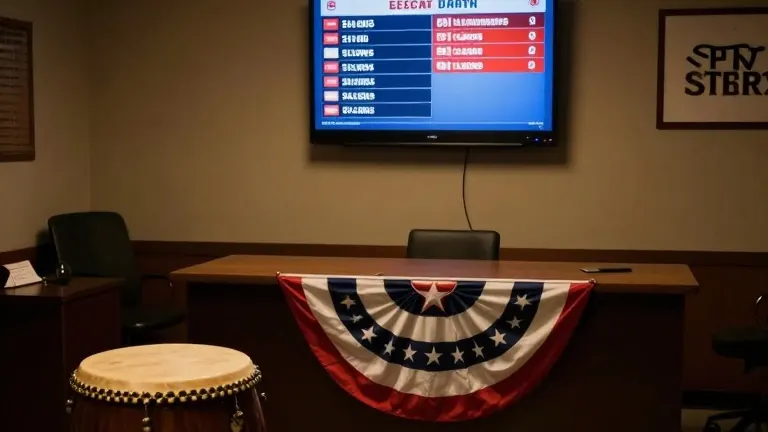
Flanagan highlighted her own upbringing to connect with financially squeezed voters. At her victory watch party in St. Paul, she addressed supporters as leaders from the White Earth Nation played a victory song on a drum. "Minnesota, you just beat Donald Trump again," Flanagan said.
The National Congress of American Indians, the oldest and largest association of tribal governments, described the results as historic milestones. Native American women comprise approximately 1% of the U.S. population according to Census Bureau data, yet they have historically been underrepresented in elected office.
Larry Wright Jr., the executive director of the National Congress of American Indians, stated that Native women led their nations and protected their families long before entering government halls. He added that these victories send a message to young Native girls that their voices matter and their leadership is essential.
Wright expressed hope that the new representation will lead to meaningful progress in protecting tribal lands and honoring treaty obligations between the U.S. government and tribal nations. He noted that the wins are crucial for the future of Indian Country.
A third Native American woman may soon join them in history. In Alaska, Democrat Mary Peltola, who is Yup'ik, is in a Senate race against incumbent Republican Dan Sullivan. The race remains a toss-up, and the outcome may not be decided until ranked-choice tabulation is completed later this month.
Source: CBS News