Tesla Starts Optimus Production in Fremont, Unveils Self-Teaching Robot Training Program
Tesla has begun manufacturing humanoid robots at its Fremont facility and outlined a plan for thousands of units to train themselves.
By Enzo Almasi ·
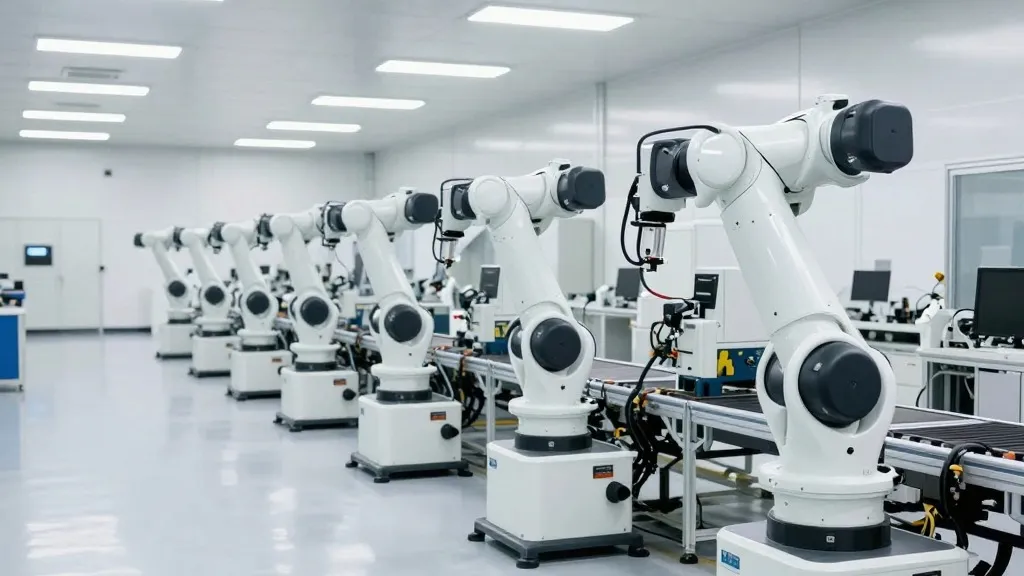
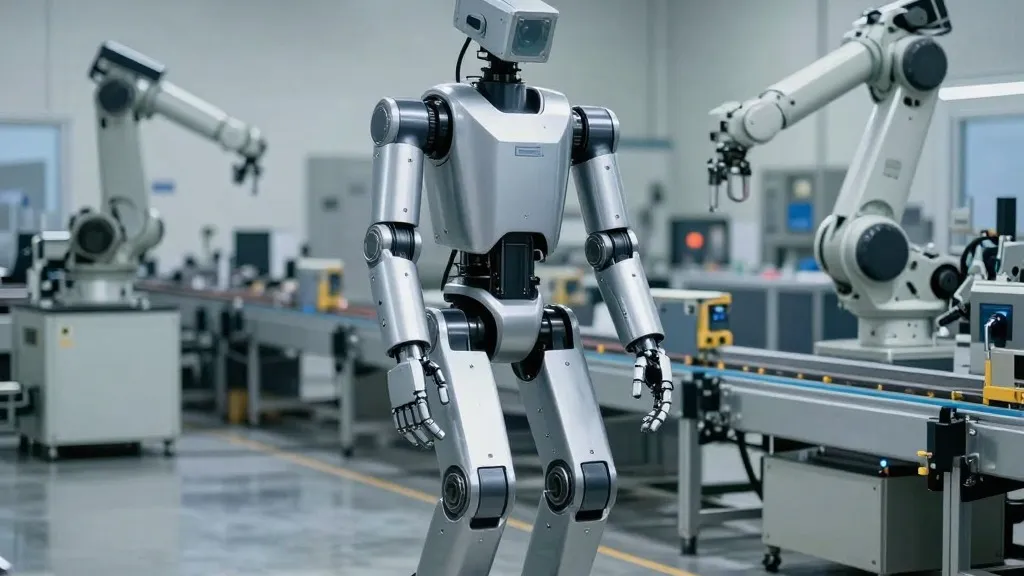
Tesla has commenced production of its Optimus humanoid robot on a dedicated high-volume line at its Fremont factory, marking the first time the company has manufactured units it classifies as production-ready. The company stated in its third-quarter shareholder letter that its manufacturing process for the robot is now suitable for commercial products.
The production line was installed in a facility that previously assembled Model S and Model X vehicles until this spring. Tesla cleared the former vehicle line in 46 days to accommodate a robot production line designed for an annual capacity of one million units. During the company's earnings call on Wednesday, Elon Musk noted that most of the equipment for this capacity is already at the Fremont location, with output expected to ramp toward approximately 20,000 robots per week.
Musk characterized the production ramp-up as a slow start, comparing it to an S curve. He stated that the current focus is on refining the robot's artificial intelligence, electromechanical design, reliability, and service life, with that work expected to be completed by the end of next year. At that point, Tesla plans to begin delivering Optimus to other companies for tasks that are dangerous, repetitive, or require around-the-clock operation.
A central component of the company's plan is an initiative called Optimus Academy, where the robots will be trained. Musk explained that unlike Tesla's fleet of vehicles, which continuously supply real-world driving data, Optimus does not have a large fleet from which to gather training data. The Optimus Academy will address this by having 10,000 to 20,000 robots practice a wide range of tasks and feed that learning into the next version of the model, with every unit from the Fremont line serving as a source of this training data.
The company is also preparing to upgrade the robot's hardware. Tesla plans to integrate its AI5 chip into Optimus next year, and Musk indicated that a new video of the robot should be released within one to two months, demonstrating task completion driven by AI rather than pre-programmed motions. He contrasted this with rival humanoid robots that only run scripted routines, stating that those would not hold up in a real-world setting.
Tesla is also developing its supply chain for the program. In September, the company certified Tuopu, Joyson, and Sanhua as mass-production partners for Optimus components. A larger Optimus factory is also being built at Giga Texas, where drone footage showed the steel frame nearing completion, and Musk has stated a long-term target of 10 million robots per year for that facility.
Tesla executives also said production costs for Optimus are trending toward the expected manufacturing cost of the Cybercab, which is a sign the robot is being engineered for volume from the start. The hands remain the most challenging part of the design, a point Musk also made earlier this month, and that is where much of the current engineering effort is focused.
The company's ability to produce and sell Optimus units will be a key factor in its future revenue and market position. The development of a large-scale, self-teaching fleet is intended to accelerate the robot's capabilities, a crucial step toward deploying it in commercial and industrial roles.
Source: Teslarati · original report published