10 Million More Early Ballots Cast as Trump Reinstates Weekend Rallies
The president reversed a decision to hold phone-only events after receiving calls from state allies, aiming to boost turnout in two key Senate races.
By Chiara Saeed ·

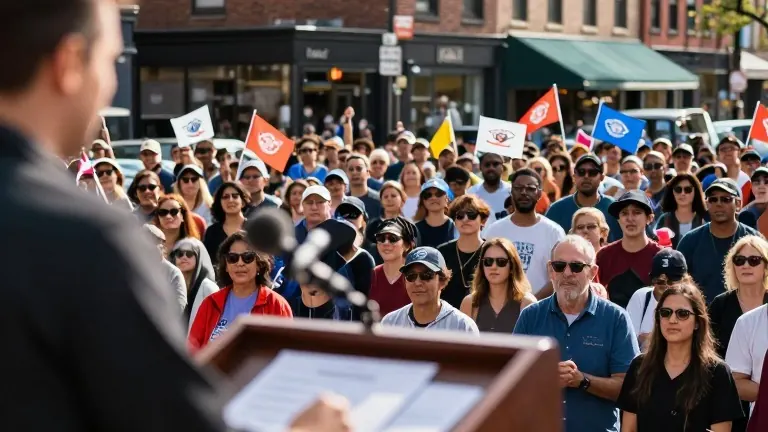
American voters have already cast nearly 10 million more ballots in the five days leading up to the election than they did at this point in 2022. This surge in early voting has prompted President Donald Trump to alter his weekend plans, adding in-person rallies in Iowa and Kansas that had previously been canceled.
The shift affects two states where early voting numbers are up by roughly 30%. In both locations, competitive Senate races are underway. The increased turnout is outpacing the previous midterm cycle by a wide margin. In Texas, more than 6.3 million residents voted early as of Wednesday. That figure represents a 50% increase over the 4.2 million ballots cast at the same point four years ago. Similar gains were recorded in Maine, Michigan, North Carolina, and Kansas, with South Carolina seeing an 83% jump.
Trump initially planned to skip the weekend in-person events in favor of a 72-hour series of telerallies. The Republican National Committee said the phone rallies were designed to reach a wider audience. However, the president changed his mind after speaking with associates in the two states. Those contacts told him that a physical presence would be more effective than a broadcast appearance. He confirmed the change on Thursday, stating that he felt perfect and did not need to rest.
The president’s schedule underwent further adjustments on Friday. His Iowa stop was first moved from Dubuque to Cedar Rapids, then shifted back to Dubuque hours later. A person familiar with the planning described the changes as fluid. The RNC later confirmed the final itinerary: Trump will campaign in Dubuque on Sunday and in Salina, Kansas, on Saturday. He had originally planned the same back-to-back stops before the temporary cancellation.
Both states feature Senate contests that will determine whether Republicans maintain their narrow majority in the chamber. In Kansas, Senator Roger Marshall is seeking reelection. Trump has called Marshall fantastic and credited him for advocating for agricultural tax policies. In Iowa, Republican candidate Ashley Hinson, a current House member, is facing a Democratic opponent. Trump has visited both states earlier in the month to support these candidates.
Democrats and Republicans both believe the high volume of early voting favors their respective parties. The election has centered on affordability and public perception of the president. Republicans have expressed concern that voter dissatisfaction with high costs could suppress their turnout. Democrats have focused their messaging on these economic issues. In Michigan, former candidate Haley Stevens continues to appear in the news cycle, criticizing her primary rival Abdul El-Sayed on social media and television appearances despite his victory in August.
Trump criticized Marshall’s Democratic challenger, Adam Hamilton, as a radical who has caused turmoil within the church. Hamilton responded by suggesting Marshall would label Jesus woke if he were standing before them today. The president’s last-minute scheduling changes come as he has already headlined 25 rallies in October. His schedule included a stop in Daytona Beach, Florida, on Friday night.
Source: Daily Breeze