The Cost of Running Against the Partisan Tide
Two candidates from opposite ends of the political spectrum describe the financial and structural hurdles of seeking Congress in heavily one-party states.
By Chiara Saeed ·
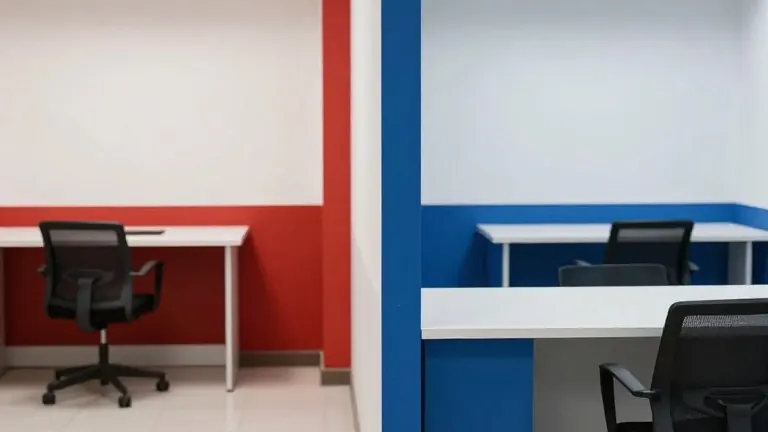
Eighty percent of congressional districts are currently rated as solidly Republican or solidly Democratic, according to political analysts. This structural imbalance creates a distinct class of candidates who run with limited resources and little institutional support. Lisa Kinney, a former state senator, is one such candidate. She is seeking the sole House seat in Wyoming, a district that has elected only Republicans to Congress since the late 1970s.
Kinney describes her campaign as a series of long drives and informal meetings in places like diners in Casper. She reports encountering voters who oppose her party’s positions on immigration and gender issues. In one instance, a man named Joe Beck told her he had already voted for her but remained pessimistic about her chances. Beck, who does not identify with a specific party, warned her that a "tsunami" was coming on Election Day because Wyoming is the reddest state in the nation.
The lack of party infrastructure in these districts means candidates often lack office space and large staffs. Kinney relies on a small group of helpers and spends her time on the road to discuss preserving public lands and lowering health care costs. Her husband, Rodney Lang, noted that even a loss strengthens the party’s presence in the state. Kinney acknowledged that many voters will choose the candidate with an "R" next to their name, yet she maintains that she believes she can win.
Two thousand miles away, George Austin faces a mirrored challenge. The home builder and former football coach is running as a Republican in Connecticut’s second congressional district. That seat is held by Democratic Representative Joe Courtney, who has won reelection every cycle for two decades. Democrats in Connecticut have won 45 consecutive U.S. House elections since 2008. Austin serves as his own scheduler and volunteer coordinator, roles that require him to wear many hats in a lean operation.
Austin invested a quarter of a million dollars of his personal funds into the race. He stated that while he is successful, he is not wealthy, and the money was necessary to meet the demands of the contest. He aims to restore balance in a state where representation has lacked variety. Austin also cited the high number of uncontested races in Connecticut as a motivation. Forty-six of the state legislature’s 187 seats are currently uncontested.
Eric Ostermeier, founder of the nonpartisan site Smart Politics, observed that 19 state delegations in the current Congress consist entirely of members from the same political party. He noted that this number is a high watermark not seen since 1953. Ostermeier attributed this monolithic tendency to gerrymandering, geographic sorting of voters, and the difficulty state candidates have in distinguishing themselves from the national party brand. He explained that a Wyoming Democrat is often viewed through the lens of the national Democratic Party, regardless of local policy positions.
Austin and Kinney both emphasized that running in these environments requires a specific mindset. Austin warned that candidates must decide if they are in it for the right reasons because the process involves losing a great deal of sleep. He rejected the idea of a casual attempt, stating that the race requires full commitment regardless of the odds. Kinney similarly viewed her effort as a way to give Wyomingites a second opinion, asserting that she is a moderate who can speak to voters across the aisle.
Source: KPBS