Midterm Stakes: California Voters Decide Control of Congress and Governor's Office
As polls open at 7 a.m., the outcome of today's election will determine which party leads investigations, confirms nominees, and sets the agenda for the final two years of the current administration.
By Chiara Saeed ·
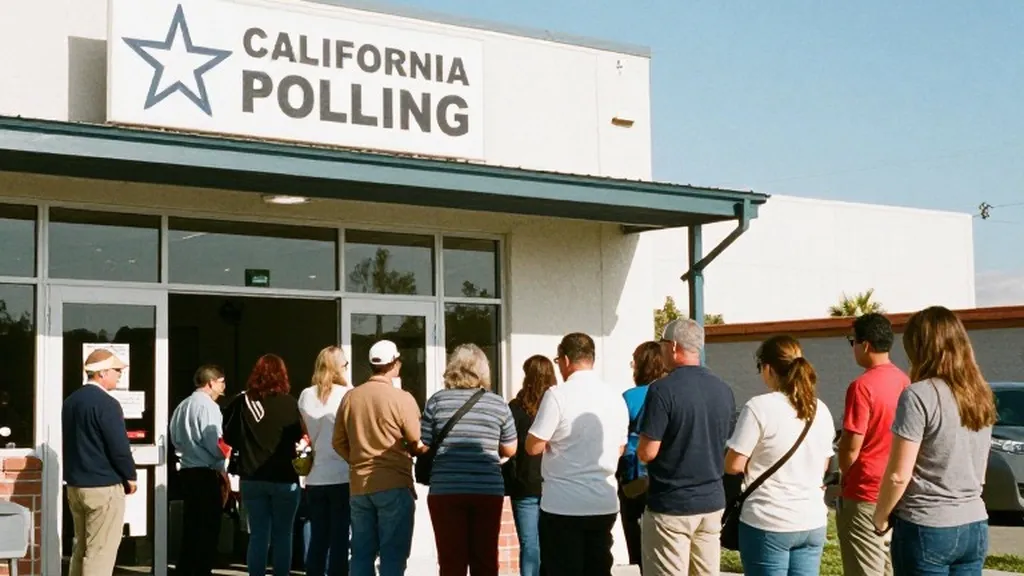
Voters in California and across the nation are casting ballots on Tuesday, November 3, 2026, in a midterm election that will determine the balance of power in Washington for the next two years. The Associated Press describes the contest as a referendum on President Donald Trump's second term, with many citizens expressing frustration over high prices and an unpopular war with Iran. With polls open from 7 a.m. to 8 p.m. in California, the state plays a pivotal role in a broader national fight where the results will dictate whether the White House faces a cooperative or an adversarial Congress.
The control of the House of Representatives is the primary battleground, as all 435 seats are up for election. Republicans currently hold 218 seats, while Democrats hold 214, with one independent and several vacancies. According to Ballotpedia, Democrats need a net gain of three districts to secure a majority, whereas Republicans can afford to lose no more than two. This narrow margin means that the outcome in competitive districts will be decisive. Ballotpedia identifies 46 battleground districts, including 25 held by Democrats and 21 held by Republicans, creating a tight race where every vote counts.
In the Senate, 35 seats are at stake, including 33 regular elections and two special elections for the remainder of the terms held by Marco Rubio and JD Vance. Republicans hold 53 seats and Democrats 45, with two independents caucusing with the Democrats. Democrats require a net gain of four seats to take control, while Republicans must hold onto at least 49. The Associated Press notes that the Senate race is particularly tight, with one or two seats potentially tipping the balance. Key contests include races in Georgia, where Sen. Jon Ossoff faces Rep. Mike Collins, and in Michigan, where Abdul El-Sayed is challenging Mike Rogers.
The governor's race in California is an open seat, as the incumbent did not run for re-election. This race is one of 36 governorships decided today, with Republicans holding 26 offices and Democrats 24 heading into the election. Democrats need a net gain of two governorships to achieve a nationwide majority, a status they have not held since 2010. The Associated Press highlights that the governor's race is a critical component of the Democratic strategy to reclaim institutional power, particularly in states where new congressional maps are in effect following mid-decade redistricting.
If Democrats secure control of at least one chamber, the Associated Press reports that investigations and possible impeachment proceedings are likely. House Democratic Leader Hakeem Jeffries has outlined a 100-day agenda focused on the cost of living and oversight, which would be central to a Democratic-led House. This agenda includes scrutiny of executive actions and a push for legislative action on economic issues that voters cite as their top concerns. The potential for a new speaker also carries symbolic weight, as Jeffries would be the first Black speaker of the House.
The election also has significant implications for the 2028 presidential cycle. A strong Democratic performance would boost the profiles of potential candidates such as Gavin Newsom, JB Pritzker, and Pete Buttigieg. Conversely, a Republican hold could complicate the path for Vice President JD Vance. The Associated Press notes that Republicans have attempted to counter the traditional midterm trend of losing seats through redistricting, but the effectiveness of these new maps remains to be seen in states like California and Florida.
Election administration has been a point of contention, with the Justice Department threatening to prosecute local officials and filing lawsuits in Alaska and California. A federal judge temporarily barred the administration from implementing a plan to prevent noncitizen voting, a move critics say could disenfranchise eligible voters. The U.S. Postal Service has added staff and hours to ensure mail ballots are counted on time, a critical detail in states like California where a large portion of the vote is cast by mail. These logistical efforts aim to ensure that every vote is counted accurately and efficiently.
The financial scale of the 2026 elections is expected to be the highest in history, with Republican committees outspending Democratic counterparts at the national level. However, Democrats have outraised their opponents at the candidate level. The Associated Press analysis of advertising data shows that 88.1 percent of Republican general election TV ad spending went to states and districts Trump won in 2024. This strategy reflects a focus on defending key areas where the party has strong support, while Democrats target competitive districts and states to flip control of Congress.
Voters are heading to the polls with a mix of optimism and anxiety. The Associated Press notes that more than 57 million people had already voted as of Monday, surpassing early vote totals from four years ago. RNC Chairman Joe Gruters emphasized the importance of turnout, stating that if Republicans turn out their voters, they win. In contrast, DCCC Chair Rep. Suzan DelBene said the American people are angry and want change. These sentiments reflect the broader mood of an electorate that is deeply engaged and focused on the direction of the country.
As the day progresses, attention will turn to the early results and the potential for a close race. The Associated Press notes that the election is a critical test for both parties, with the outcome shaping the legislative agenda for the final two years of the current administration. The results will also provide insight into the public's view of the economy and foreign policy, two areas where voters have expressed significant concern. The day's events will set the stage for the next phase of American politics, with the balance of power in Congress serving as the central focus.