New Maps in CA and Six Other States Face Voter Reality Check
While California uses a new congressional map, analysts question if voters in seven states will align with the drawn boundaries on Election Day.
By Enzo Almasi ·
It is Election Day, Tuesday, November 3, 2026, and voters are casting ballots to determine who controls Congress for the final two years of President Donald Trump's second term. All 435 seats in the U.S. House are up for grabs, along with 35 seats in the U.S. Senate. The Associated Press describes the contest as a referendum on the current administration, with many voters expressing frustration over high prices and an unpopular war with Iran. According to AP-NORC polling, 35% of U.S. adults approve of the president's job performance, while roughly seven in ten say the country is heading in the wrong direction.
Seven states are using new congressional maps for the first time following mid-decade redistricting efforts. These states are California, Florida, Missouri, North Carolina, Tennessee, Texas, and Ohio. The redrawing of these boundaries was intended to shift the political balance, but there is significant debate over whether the actual voting patterns will match the new district lines. Republicans have argued that the new maps provide them with a structural advantage, while Democrats contend that the maps are overly gerrymandered and do not reflect the will of the electorate.
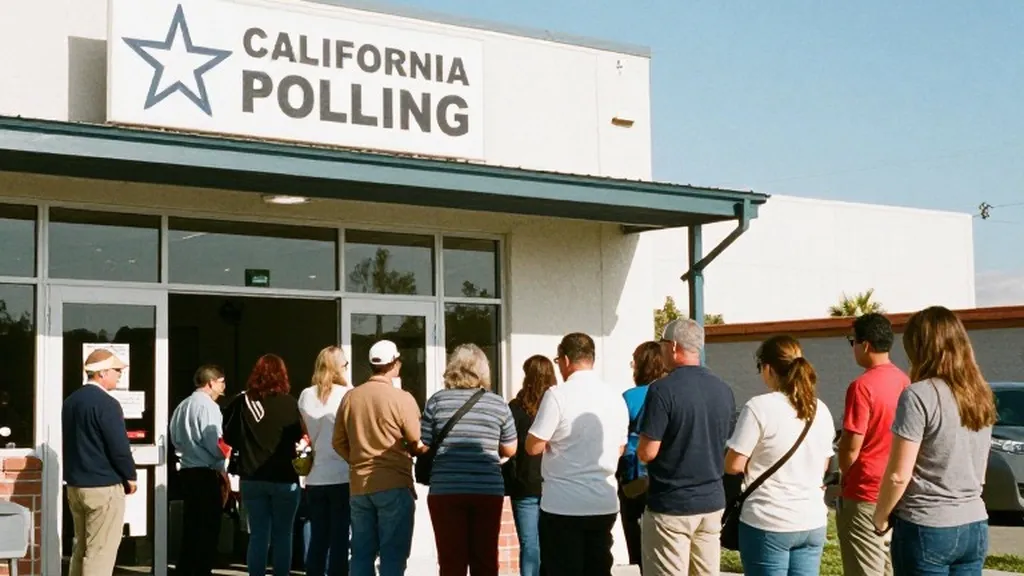
California is among the states with a new map, and polls are open from 7 a.m. to 8 p.m. local time. The state does not have a Senate race on the ballot, but it does have an open seat for governor. The Associated Press notes that the new congressional districts in California may not vote as drawn because of the state's complex urban and rural dynamics. Voters in the Golden State have historically leaned Democratic, but the new boundaries attempt to create more competitive districts by mixing suburban and urban areas.
In Florida, the new map has also drawn attention. The state is using a new congressional layout, and polls are open from 7 a.m. to 7 p.m. local time. Florida is a key battleground for both the Senate and the House. The special Senate election for the rest of Marco Rubio's term is being watched closely. Republicans argue that the new map helps them hold onto seats, while Democrats point to the state's growing diverse population as a reason the map may not hold up as predicted. The Associated Press reports that the new districts in Florida may not vote as the mapmakers intended.
Missouri and North Carolina are also using new congressional maps. In Missouri, polls are open from 6 a.m. to 7 p.m. local time. The state has a new Senate race as well, with an open seat due to the retirement of a long-serving senator. North Carolina polls are open from 6:30 a.m. to 7:30 p.m. local time. The state has an open Senate seat, and the race between Democratic former Governor Roy Cooper and Republican former RNC chair Michael Whatley is seen as a bellwether for the national trend. The new congressional maps in these states are expected to be tested by voters who have shown a tendency to vote differently in presidential and midterm cycles.
Tennessee and Texas are the other two states with new congressional maps. In Tennessee, poll hours vary by county. The state is using a new map that was drawn after a legal battle over the boundaries. Texas polls are open from 7 a.m. to 7 p.m. local time. The state has a new Senate race, with Republican Attorney General Ken Paxton running against Democrat James Talarico. The Associated Press notes that the new map in Texas was designed to favor Republicans, but the state's shifting demographics may lead to unexpected results. The new districts in these states are being closely monitored by both parties.
Ohio is the seventh state using a new congressional map. Polls in Ohio are open from 6:30 a.m. to 7:30 p.m. local time. The state has a special Senate election for the rest of JD Vance's term, with Republican Senator Jon Husted running against Democratic former Senator Sherrod Brown. The new congressional map in Ohio was drawn to give Republicans an advantage, but the state's competitive nature means that small shifts in voter turnout could change the outcome. The Associated Press reports that the new districts in Ohio may not vote as drawn, particularly in the suburban areas surrounding Cleveland and Columbus.
More than 57 million people had already voted as of Monday, surpassing the early vote of four years ago in many closely watched states. This early turnout is a sign of high engagement in the midterm elections. The Associated Press notes that Republicans were bracing to lose the House and fighting to hold the Senate, while Democrats were cautiously optimistic. One or two seats could tip either chamber, making the new maps in these seven states even more critical. The outcome of these races will determine whether the president's party can maintain its grip on Congress or if the opposition will gain control.
The new congressional maps in California, Florida, Missouri, North Carolina, Tennessee, Texas, and Ohio are being tested today. Voters are deciding not only who will represent them but also whether the new boundaries will hold up under the pressure of a contested election. The Associated Press reports that the new maps may not vote as drawn, suggesting that the political landscape is more fluid than the redistricting process indicated. The results of these races will have a significant impact on the balance of power in Congress for the next two years.